
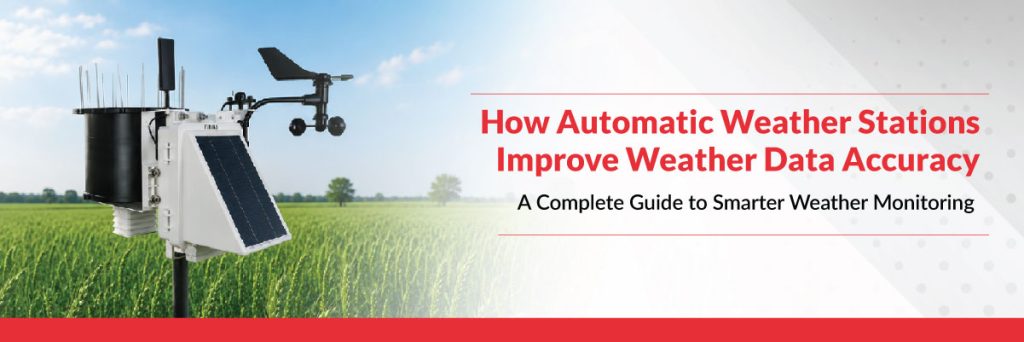
How Automatic Weather Stations Improve Weather Data Accuracy
Accurate weather data is the foundation of informed decision-making across industries such as agriculture, aviation, infrastructure, environmental research, disaster management, and renewable energy. Traditional weather observation methods often rely on manual readings, making them time-consuming and susceptible to human error. Today, Automatic Weather Stations (AWS) have transformed weather monitoring by providing continuous, real-time, and highly accurate meteorological data.
In this guide, we’ll explore how Automatic Weather Stations improve weather data accuracy, their key components, benefits, applications, and why LYNX – Lawrence & Mayo is a trusted provider of advanced weather monitoring solutions.
What is an Automatic Weather Station?
An Automatic Weather Station (AWS) is an integrated system equipped with advanced sensors that automatically measure and record various atmospheric parameters without requiring manual intervention.
Typical weather parameters monitored include:
- Air Temperature
- Relative Humidity
- Rainfall
- Wind Speed
- Wind Direction
- Solar Radiation
- Atmospheric Pressure
- Soil Moisture (optional)
- Soil Temperature (optional)
These measurements are transmitted in real time to a central monitoring platform for analysis and reporting.
Explore LYNX’s Weather & Environmental Monitoring Solutions:
https://lynxinst.com/products/weather-station/
Why Weather Data Accuracy Matters
Reliable weather information directly impacts operational efficiency, safety, and planning.
Accurate weather data helps organizations:
- Improve crop management
- Predict extreme weather events
- Support aviation safety
- Optimize construction scheduling
- Monitor environmental conditions
- Improve disaster preparedness
- Enhance renewable energy forecasting
Even small inaccuracies can lead to significant operational and financial losses, making precision weather monitoring essential.
How Automatic Weather Stations Improve Weather Data Accuracy
1. Continuous Real-Time Monitoring
Unlike manual observations taken at fixed intervals, Automatic Weather Stations collect data 24/7.
Continuous monitoring ensures:
- Instant weather updates
- Detection of sudden weather changes
- Reduced data gaps
- Better forecasting models
Real-time data is especially valuable during severe weather events where conditions can change rapidly.
2. High-Precision Sensors
Modern AWS systems use highly calibrated sensors designed for maximum accuracy.
These sensors measure:
- Temperature within narrow tolerances
- Accurate rainfall accumulation
- Wind speed and direction
- Atmospheric pressure
- Solar radiation intensity
The result is consistent, repeatable, and reliable weather observations.
3. Elimination of Human Error
Manual weather observations can be affected by:
- Reading mistakes
- Recording errors
- Missed observations
- Inconsistent measurement practices
Automatic Weather Stations eliminate these issues by collecting and storing data automatically, ensuring greater reliability.
4. High-Frequency Data Collection
Instead of recording data only a few times a day, AWS systems can capture observations every few seconds or minutes.
This provides:
- Better trend analysis
- More detailed weather patterns
- Improved forecasting accuracy
- Enhanced climate studies
5. Remote Monitoring Capabilities
Modern AWS solutions support remote communication through GSM, Wi-Fi, Ethernet, or satellite networks.
Users can access weather data from virtually anywhere using computers, tablets, or smartphones.
Remote access enables:
- Faster decision-making
- Centralized monitoring
- Reduced field visits
- Efficient maintenance planning
6. Advanced Data Logging and Storage
Automatic Weather Stations automatically store historical weather records for long-term analysis.
Historical datasets help organizations:
- Analyze climate trends
- Compare seasonal variations
- Improve agricultural planning
- Support scientific research
- Meet regulatory reporting requirements
7. Reliable Performance in Challenging Environments
High-quality AWS systems are designed to operate reliably in demanding conditions, including:
- Agricultural fields
- Mountain regions
- Coastal areas
- Industrial sites
- Research stations
- Smart cities
- Construction projects
Durable construction and weather-resistant components ensure dependable performance year-round.
Applications of Automatic Weather Stations
Automatic Weather Stations support a wide range of industries.
Agriculture
Farmers use AWS data to:
- Schedule irrigation
- Monitor crop conditions
- Predict frost
- Reduce water consumption
- Improve yield
Construction
Construction companies rely on weather data to:
- Plan site activities
- Improve worker safety
- Protect equipment
- Reduce project delays
Environmental Monitoring
Researchers use AWS systems to study:
- Climate change
- Air quality
- Ecosystem health
- Long-term environmental trends
Renewable Energy
Solar and wind energy projects use weather stations to monitor:
- Solar radiation
- Wind speed
- Wind direction
- Temperature
This helps maximize energy production and operational efficiency.
Aviation and Transportation
Accurate weather information improves:
- Flight safety
- Airport operations
- Highway maintenance
- Marine navigation
Key Benefits of Automatic Weather Stations
- High-accuracy weather measurements
- Continuous real-time monitoring
- Minimal human intervention
- Automated data logging
- Remote accessibility
- Faster weather forecasting
- Reduced maintenance requirements
- Improved operational efficiency
- Long-term climate monitoring
- Reliable performance in diverse environments
Why Choose LYNX – Lawrence & Mayo for Automatic Weather Stations?
With over a century of expertise in precision instrumentation, LYNX – Lawrence & Mayo offers advanced Automatic Weather Stations designed to deliver accurate, reliable, and real-time weather monitoring across multiple industries.
Whether your application involves agriculture, environmental research, infrastructure, renewable energy, or industrial monitoring, LYNX provides dependable solutions backed by technical expertise and nationwide support.
Explore our weather monitoring portfolio here:
Explore our complete range of scientific and precision instruments here
Frequently Asked Questions (FAQs)
1. What is an Automatic Weather Station?
An Automatic Weather Station is a system that automatically measures and records weather parameters such as temperature, humidity, rainfall, wind speed, wind direction, and atmospheric pressure.
2. How does an Automatic Weather Station improve weather data accuracy?
AWS systems use high-precision sensors, automated measurements, continuous monitoring, and digital data logging to eliminate human error and provide highly reliable weather information.
3. Which industries use Automatic Weather Stations?
They are widely used in agriculture, construction, environmental monitoring, renewable energy, aviation, transportation, research, and disaster management.
4. What weather parameters can an AWS measure?
Depending on the configuration, an AWS can measure temperature, humidity, rainfall, wind speed, wind direction, atmospheric pressure, solar radiation, soil moisture, and soil temperature.
5. Where can I find Automatic Weather Station solutions from LYNX – Lawrence & Mayo?
Visit the Hydrometeorology Instruments section on the LYNX website to explore the available Automatic Weather Station solutions and related products.