
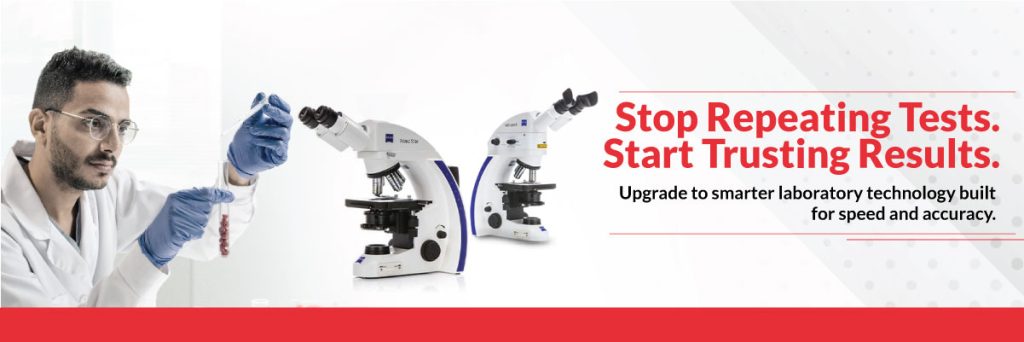
Modern laboratories face growing pressure to deliver accurate results faster than ever. Whether it’s for research, diagnostics, quality control, or education, performance is judged not just by precision, but by speed, consistency, and efficiency.
Yet one principle never changes – accuracy must never be compromised, even under time pressure.
The key to meeting this challenge lies in choosing instruments that support smarter workflows instead of adding complexity. When labs invest in tools that work intuitively and reliably, productivity increases across the board.
Where laboratories typically lose valuable time:
Even highly skilled teams can encounter bottlenecks that slowly drain productivity and increase operational costs. These workflow pain points often don’t show up in weekly reports, but over time they become significant.
Repeating measurements due to inconsistent output:
If an instrument produces varying results under the same conditions, technicians must rerun tests to verify values. Each repeat burns extra consumables, uses up staff time, and delays sample reporting – especially costly in high – volume labs.
Manual recording and transcription:
Writing values on paper and later entering them into a Laboratory Information Management System (LIMS) or spreadsheet is slow and prone to human error. Even a small typo can trigger revalidation or audit follow-ups.
Waiting for equipment to stabilize:
Some instruments require extended warm-up or setup time before they deliver dependable readings. When multiple operators are waiting to use the same instrument, queues form and throughput drops.
Complex UI or difficult operation:
Devices with complicated interfaces slow down trained staff and make onboarding new technicians harder. Workflow delays often occur not because the sample is difficult, but because the tool is.
Unexpected downtime and maintenance:
Unreliable systems halt workflow suddenly. While the repair itself is inconvenient, the downstream effects of rescheduling, notification, and backlog clearance cost far more.
Difficulty in retrieving past data:
Without digital integration, locating previous readings or reports takes longer than anticipated and interrupts daily tasks.
Features that help labs work smarter
Smart lab instruments do more than measure — they help streamline every step of the workflow. When tools are built with the user and process in mind, time savings accumulate rapidly.
Rapid and repeatable measurement:
Instrumentation that stabilizes quickly and delivers consistent output eliminates the need for reruns, speeding throughput and reducing consumable usage.
Integrated digital data management:
Systems that output results directly into software, USB, or LIMS save time on transcription and improve traceability across the lab.
Intuitive user interface:
Clear menus, easy controls, and logical steps reduce training time and allow multiple operators to work effectively, regardless of experience.
Ergonomics and ease of handling:
Comfortable viewing angles, well-placed controls, and thoughtful design reduce fatigue during long processing sessions and help maintain accuracy throughout the day.
High reliability and durability:
Robust systems remain calibrated longer and experience fewer interruption events, meaning technicians spend more time working and less time troubleshooting.
Consistency across users:
Standardized workflows and consistent output enable the entire team to perform uniformly, which improves turnaround and reporting quality.
Instruments that enable efficient laboratory performance
The right equipment can transform lab workflows by reducing bottlenecks and increasing confidence in results.
Biological Microscopes – Consistent Observation and Clarity
Lynx offers a range of biological microscopes suited for clinical, educational, research, and industrial labs. These systems deliver clear, dependable imaging that reduces observation time and minimizes re-adjustment.
Key options include:
• Binocular Microscope LM 52 1706 — Everyday essential for quick and accurate visual analysis.
• Binocular Microscope LM 52 1705 — Reliable optics for general routine tasks.
• Binocular Microscope LM 52 1710 — Enhanced magnification for detailed imaging.
• Fluorescence Microscope LM 52 3000 — For advanced research where clear imaging of fluorescent samples is required.
• Fluorescence Microscope LM 52 3002 — Powerful system for scientific labs requiring detailed visualization.
• Inverted Microscope with Fluorescence Attachment — Ideal for cell culture labs and complex sample types.
• Monocular Microscope LM 52 1601 & similar monocular variants — Simple, fast imaging for basic lab and classroom use.
• Trinocular Microscope LM-52-4000 — Allows digital imaging capture alongside traditional viewing.
Biological microscopes like these reduce time spent on focusing and adjustments, meaning technicians can proceed to analysis faster.
Digital Microscopes – Faster Imaging and Integration
Digital microscopes marry optical clarity with direct digital output, making documentation and analysis instantly accessible.
Examples include:
• DIGITAL MICROSCOPE LM 52 1711 — Efficient imaging with immediate digital capture.
• LM-52 -1712 — Ideal for labs that need visual records, measurements, and fast reporting.
Digital models streamline the imaging process because results can be instantly saved, annotated, and shared, reducing time spent on duplication or transcription.
Efficiency means accuracy achieved the first time
Workflow optimization isn’t about rushing technicians — it’s about eliminating unnecessary steps, reducing repetition, and building confidence in every part of the process.
When instruments deliver stable, predictable results, labs can:
• Reduce reruns and improve sample throughput
• Cut turnaround times without extra staff
• Improve documentation quality
• Support compliance and audit requirements
• Minimize training time
Long-term performance depends on the right partner
A lab’s performance is as strong as its tools and the support behind them. Working with a trusted supplier helps ensure longevity, service availability, and calibration support — all essential for smooth operations long after the purchase. With Lawrence & Mayo, labs gain expert guidance on model selection, demonstrations, and dependable after-sales support, keeping equipment reliable and workflows smooth.
Thinking about laboratory upgrades or new installations?
Talk to our technical specialists, schedule demos, or get tailored product recommendations to match your applications.
📞 +91 94835 11877 | +91 74000 55001
🌐 https://lynxinst.com/